
The Seals of the Knights Templar
The Templars used their seals to authenticate charters, land grants and letters. Two are the most famous — and both survive on documents connected with the Order's estates in Wales and the wider British province.
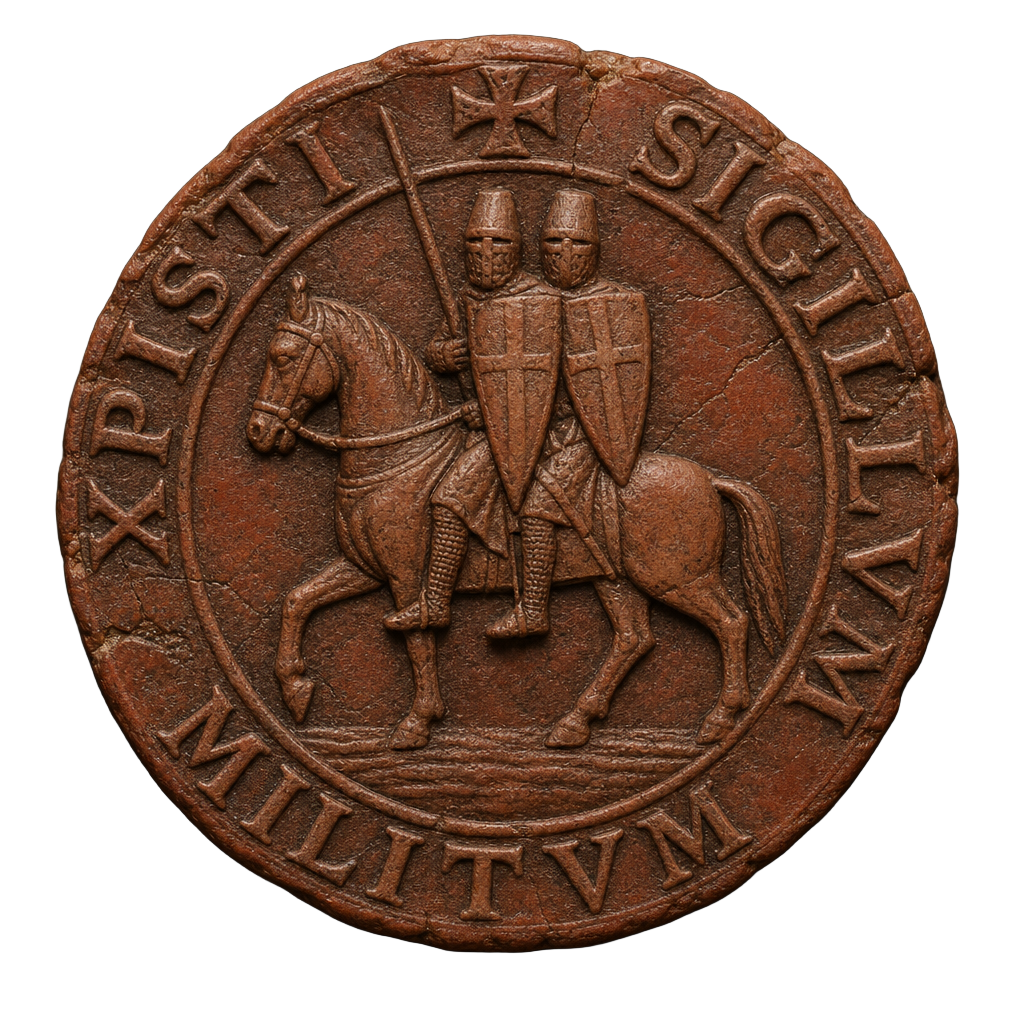
Sigillum Militum Xpisti
"Seal of the Soldiers of Christ"
This is the great seal of the Order of the Temple — two knights, fully armed, mounted on a single horse. The image was old even in the twelfth century: it recalled the Order's foundation vow of poverty, when the first brothers were said to be so poor that two of them shared a mount.
The Latin legend around the rim reads SIGILLUM MILITUM XPISTI — "the seal of the soldiers of Christ" — using the Greek chi-rho abbreviation XPI for Christ. It was used by the Grand Master in the Holy Land to authenticate the most important charters of the Order.
Later commentators read the two riders as a symbol of the double calling of a Templar: monk and knight, poverty and warfare, contemplation and action.
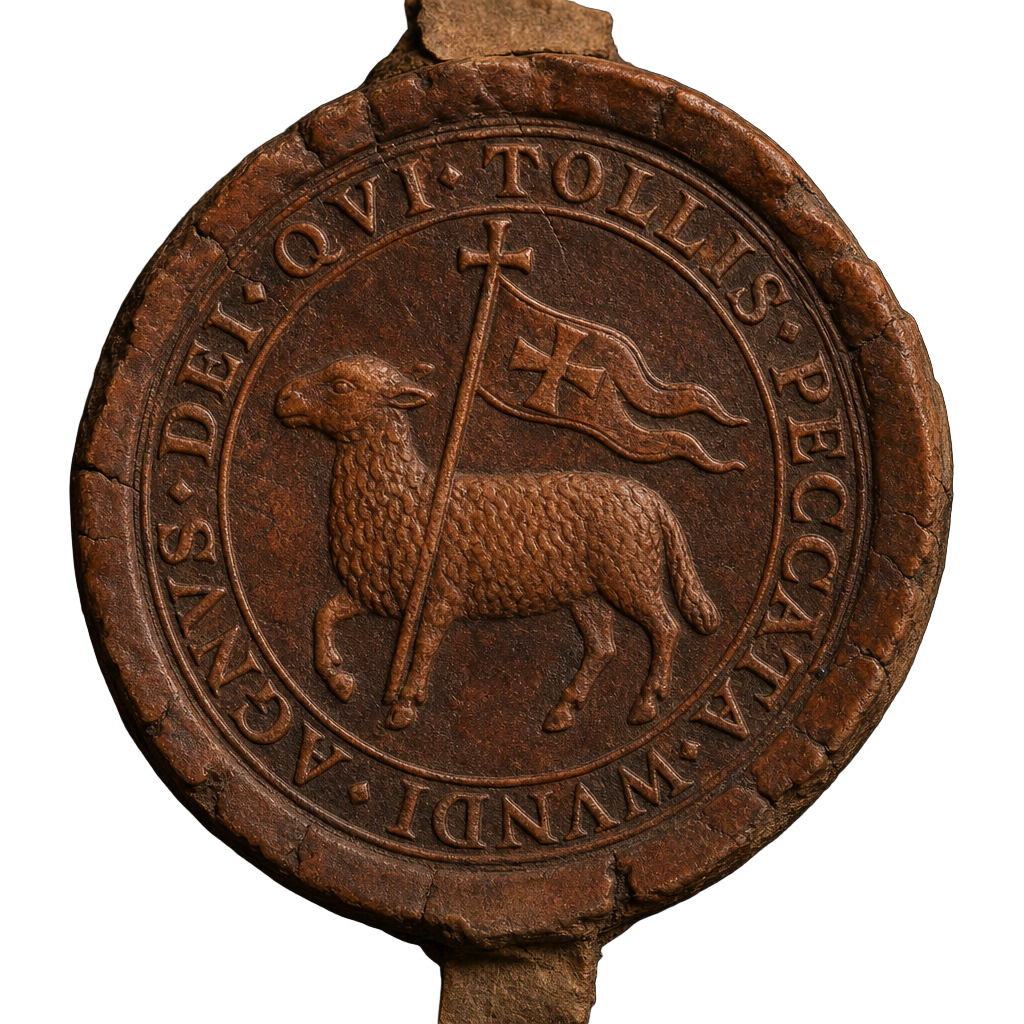
Agnus Dei
"Lamb of God" — Master's seal, England
The Agnus Dei — the Lamb of God carrying a cross-staff and a small banner — was the personal seal of the Master of the Temple in England, who governed the province that included the Welsh houses of Slebech, Llanmadoc and Llansannor.
The image comes straight from John the Baptist's greeting of Christ in the Gospel: Ecce Agnus Dei, qui tollit peccata mundi — "Behold the Lamb of God, who takes away the sins of the world." The banner it carries is the standard of the Resurrection.
For a military order that fought in the name of the Passion, the meek Lamb was a deliberate counter-image: the knight's strength was to be given over entirely to Christ, whose victory was won not in battle but on the Cross.
And the Beauséant
Alongside the seals, the Templars rallied around the Beauséant — their black-and-white piebald banner charged with the red cross pattée. Under this standard the brothers were forbidden to retreat while it still flew.
Non nobis Domine, non nobis, sed nomini tuo da gloriam.